Analysis
The Thin Line Between PR and Propaganda
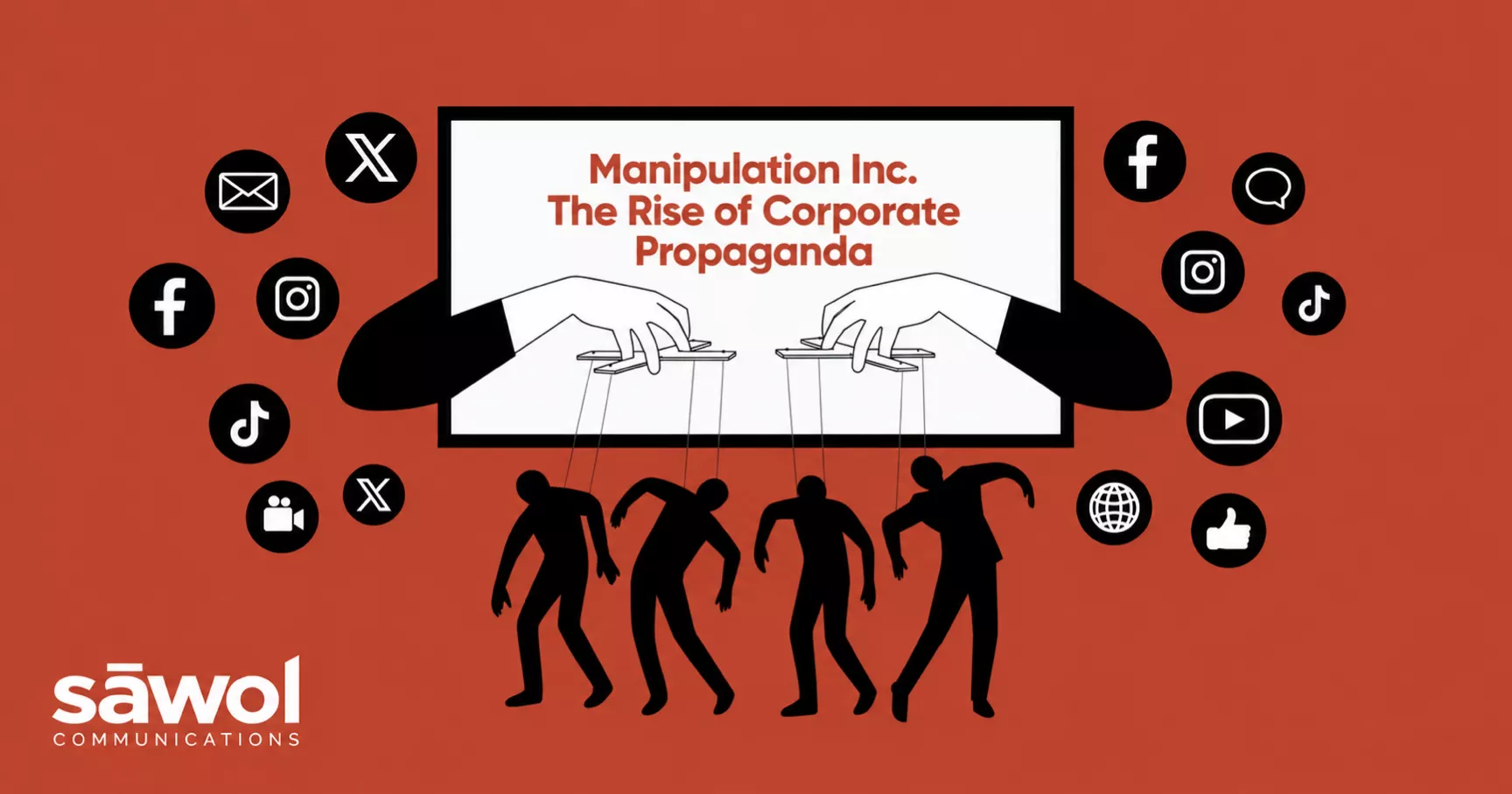
Public relations professionals have always been in the business of persuasion. Whether they are polishing a company’s image, managing a crisis, or promoting a political candidate, the objective is the same: to shape public perception. But where does persuasion cross the ethical line into propaganda? The boundary is blurry, and in recent years it has looked increasingly fragile.
The roots of public relations are not entirely innocent. Edward Bernays, often called the father of PR, openly embraced the term “propaganda” and used psychology to manipulate public opinion. In his influential 1928 book, aptly titled Propaganda, Bernays argued that controlling public attitudes was not only possible but necessary. He famously wrote that “those who manipulate this unseen mechanism constitute an invisible government which is the true ruling power.” PR has since tried to distance itself from the word’s dark connotations, but the uncomfortable link still lingers beneath the industry’s polished surface.
Take the case of the British PR giant Bell Pottinger. Once among the industry’s most prestigious firms, Bell Pottinger imploded in 2017 after a disastrous campaign in South Africa. Hired by the Gupta family, close allies of then-President Jacob Zuma, the firm orchestrated a designed to divert public anger over corruption allegations by fabricating a narrative around “white monopoly capital.” It went as far as deploying social media trolls and fake grassroots activism to inflame racial tensions and draw attention away from its clients’ scandals. When journalists and activists exposed the truth, Bell Pottinger faced a fierce backlash, was expelled from the UK’s PR trade association, and soon collapsed entirely.
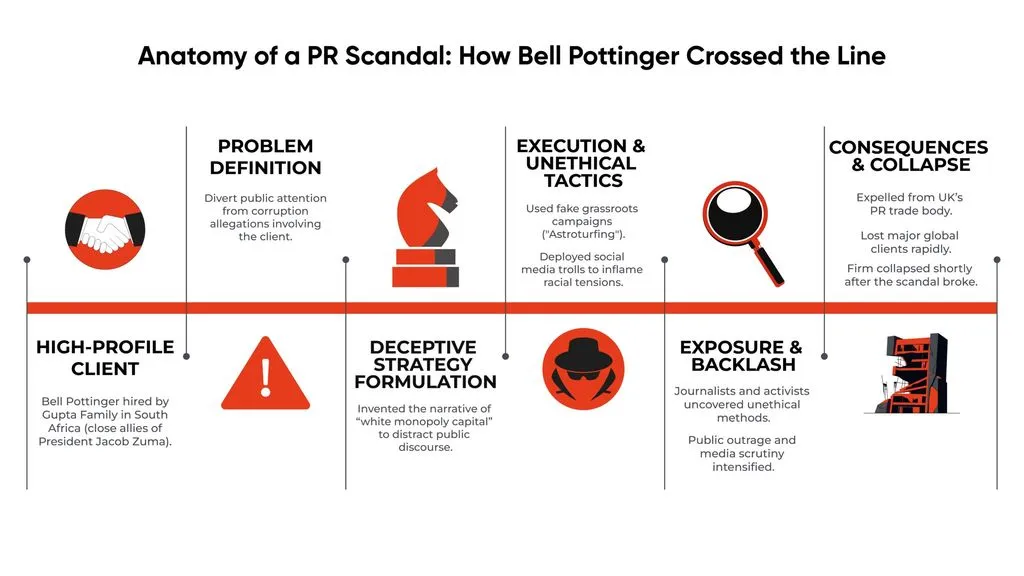
This was not Bell Pottinger’s first questionable campaign. Earlier, the firm had been secretly paid more than $500 million by the Pentagon to run covert propaganda in Iraq. It once openly boasted of mastering the “dark arts” of communication, further blurring the distinction between legitimate PR and outright propaganda of the Soviet kind. For many PR professionals, Bell Pottinger’s downfall was a stark reminder of how quickly ethical boundaries can vanish under pressure.
Rogue firms are not the only ones crossing the line. Corporate giants can also use questionable PR tactics. A notable scandal emerged in 2011 when Facebook (Meta) secretly hired the respected firm Burson-Marsteller to plant negative stories about Google. The firm approached journalists anonymously, urging them to report on privacy concerns around Google’s products. Once uncovered, the scheme caused widespread outrage, and Burson-Marsteller publicly admitted it had breached its own ethical standards. The episode showed how easily reputable organizations can slip into unethical territory, turning competition into propaganda warfare.
Disinformation tactics have evolved rapidly, using digital platforms and social media to blur the line between authentic communication and deceptive propaganda. What makes these tactics so dangerous, and so effective, is their subtlety. Rather than blatant falsehoods, modern propaganda often relies on carefully distorted truths or exaggerated narratives that resonate emotionally, which makes them harder to counter. PR professionals now work in an environment where genuine communication risks being drowned out by sophisticated, layered disinformation campaigns. Telling authentic content from artificial content has become increasingly difficult.
This erosion of trust is not limited to politics. Corporate communications are also viewed with skepticism by a public that is tired of being manipulated. Surveys consistently show declining trust in institutions, governments, corporations, and media alike, largely because of widespread cynicism toward their messaging. Phrases like “we apologize for any inconvenience” or “based on current information” are often read as evasions or partial truths rather than genuine attempts at transparency.
The solution is not simple, but it starts with PR professionals holding themselves and their peers accountable. Industry standards clearly set out principles of honesty, transparency and integrity. Yet ethical practice is not simply about following written codes. It means consistently choosing transparency over spin and honesty over evasion, as guidelines such as the PRSA Code of Ethics emphasize, even when transparency is uncomfortable.
The industry needs a renewed commitment to integrity and an active rejection of practices that shade into propaganda. Practitioners must explain to clients the lasting risks of deceptive tactics and stress that credibility, once lost, is extremely hard to rebuild. PR leaders should debate these ethical dilemmas openly and set clearer boundaries before technology and tactics move even further ahead.
PR practitioners are not propagandists by nature. They play an essential role in a healthy, informed society by fostering dialogue and transparency. Yet the line between responsible persuasion and manipulative propaganda remains fragile. Recognizing that line and guarding it vigilantly is vital, not only for public relations’ reputation but for the trust on which society depends.
More insights
More insights
All insights
Announcement
Why Dubai, and Why Now: A Founder’s Note
I get asked this a lot. “Why Dubai? Why now?” The short answer: we go where our clients need us. I first…

Note
Why Dubai Is Our Next Chapter
Every business has a moment when its next step is obvious. For us, that step was Dubai. Our story began in 2012,…

News
Ali Hajizade receives Millionaire Concept Award for transformative contribution to PR
Sāwol Communications founder Ali Hajizade has received the Millionaire Concept Award for "Transformative Contributions to the PR Industry" at a gala ceremony held on 1 December 2025 at Fairmont Baku.